Leeds England is more than just a city in Yorkshire—it’s a vibrant hub of culture, history, and innovation. From its industrial roots to its modern skyline, Leeds blends the old and new in a way that captivates residents and visitors alike.
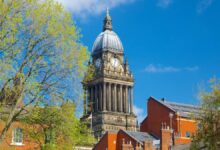
1. The Historical Evolution of Leeds England

Leeds England has a rich and layered history that stretches back over a thousand years. Once a small Anglo-Saxon village, it has transformed into one of the UK’s most dynamic urban centers. Its evolution reflects broader national trends in industry, trade, and urban development.
From Anglo-Saxon Settlement to Medieval Market Town
The origins of Leeds England can be traced to the 6th century when it was a modest farming settlement known as Loidis, a name derived from the ancient Celtic word for a wooded area. By the time of the Domesday Book in 1086, Leeds was recorded as a small manor with a population of around 150 people.
The name “Leeds” evolved from the Old English “Leodens” meaning “people’s wood.”
By the 13th century, Leeds had gained a market charter, allowing trade and boosting its economic significance.The town became a center for the wool trade, laying the foundation for future prosperity.”Leeds began not with factories, but with fields and flocks—its wealth grew from wool before it ever turned to steel.” — Yorkshire Historical Society
Industrial Revolution and the Rise of Textile Dominance
The 18th and 19th centuries marked a turning point for Leeds England.
.As the Industrial Revolution swept across Britain, Leeds emerged as a powerhouse of textile manufacturing.The city’s access to water from the River Aire and proximity to coal fields made it ideal for industrial expansion..
- Leeds became the epicenter of woolen and worsted cloth production, earning the nickname “the wool capital of the world.”
- The construction of the Leeds and Liverpool Canal in 1816 revolutionized transport and trade, linking the city to major ports.
- By 1851, over half of Leeds’ workforce was employed in the textile industry.
The city’s skyline began to fill with mills, chimneys, and warehouses. Iconic structures like the Leeds City Museum now preserve artifacts from this era, showcasing the tools, fabrics, and lives of industrial workers.
2. Leeds England’s Modern Economic Powerhouse Status
Today, Leeds England is a leading financial and business services hub in the UK, second only to London in terms of economic output outside the capital. Its transition from an industrial past to a service-driven present is a testament to adaptability and strategic urban planning.
Financial and Legal Services Hub
Leeds is home to over 30 law firms with national and international reach, including global players like DLA Piper and Eversheds Sutherland. The city hosts one of the highest concentrations of legal professionals outside London.
- The Financial & Professional Services sector contributes over £12 billion annually to the regional economy.
- Major banks such as HSBC, NatWest, and Lloyds Banking Group have significant operational bases in Leeds.
- The city is a key center for insurance, with companies like Direct Line and Aviva maintaining large offices.
This concentration has earned Leeds the nickname “the legal capital of the North.” The presence of these firms has also spurred demand for high-quality office space, leading to a construction boom in the city center.
Tech and Digital Innovation Growth
In recent years, Leeds England has emerged as a thriving tech hub. The city ranks among the top five UK cities for digital and creative industries, with over 2,000 tech companies operating locally.
- Leeds is a founding member of the Tech Nation network, supporting startups and scale-ups.
- The Digital Leeds initiative promotes smart city technologies, including AI-driven traffic management and digital public services.
- Notable tech firms based in Leeds include Sky Betting & Gaming, AND Digital, and Feedzai.
The University of Leeds and Leeds Beckett University play a crucial role in talent development, producing thousands of STEM graduates each year. Collaborative spaces like The Digital Hub provide incubation for early-stage tech ventures.
3. Cultural Vibrancy and Arts Scene in Leeds England
Leeds England boasts a cultural landscape as diverse as its population. From world-class theaters to underground music venues, the city pulses with creative energy year-round.
Theater and Performing Arts Excellence
The Leeds Playhouse and the Grand Theatre are central to the city’s performing arts identity. The Playhouse, recently redeveloped with a £20 million investment, hosts a mix of classic and contemporary productions.
- The annual Leeds Literature Festival attracts renowned authors and poets from across the globe.
- Leeds Opera and Northern Ballet are based in the city, offering high-caliber performances with international tours.
- The West Yorkshire Playhouse rebranded as Leeds Playhouse in 2018 to strengthen local identity.
These institutions not only entertain but also engage communities through outreach programs, youth workshops, and educational partnerships.
Music and Festival Culture
Leeds has a legendary music scene. It was the birthplace of bands like Kaiser Chiefs and The Pogues, and continues to nurture new talent through grassroots venues like Brudenell Social Club and The Wardrobe.
- Leeds Festival, held annually at Bramham Park, is one of the UK’s biggest music events, featuring headliners like Arctic Monkeys, Stormzy, and Foo Fighters.
- The city hosts Live at Leeds, a multi-venue festival showcasing emerging artists across genres.
- Leeds Conservatoire (formerly Leeds College of Music) is a top institution for jazz, classical, and popular music education.
“If you want to feel the heartbeat of British music, come to Leeds. It’s raw, real, and relentless.” — BBC Radio 6 Music
4. Education and Academic Excellence in Leeds England
Leeds England is a major academic center, home to two prominent universities and a growing reputation for research and innovation.
University of Leeds: A Global Research Leader
Established in 1904, the University of Leeds is a member of the prestigious Russell Group and ranks among the top 100 universities worldwide.
- It has over 35,000 students from 140 countries, making it one of the most international universities in the UK.
- Key research strengths include climate science, engineering, and public health.
- The university’s Sustainability Research Institute is a global leader in environmental policy.
The campus spans 98 acres and features state-of-the-art facilities like the Sir William Henry Bragg Building for physical sciences. Its strong industry links ensure graduates are highly employable.
Leeds Beckett University and Vocational Training
Formerly Leeds Metropolitan University, Leeds Beckett focuses on applied learning and professional development.
- Known for strong programs in sports science, architecture, and business.
- Hosts the Carnegie School of Sport, named after philanthropist Andrew Carnegie.
- Partners with local businesses for work placements and apprenticeships.
The university’s commitment to sustainability is evident in its award-winning green buildings, including the Leeds Sustainability Institute.
5. Transportation and Connectivity in Leeds England
Leeds England is a critical transport node in Northern England, connecting major cities and facilitating both regional and national mobility.
Rail and Bus Infrastructure
Leeds Station is the busiest railway station in the UK outside London, serving over 100,000 passengers daily.
- It is a key stop on the East Coast Main Line, linking London, York, and Edinburgh.
- TransPennine Express and Northern Rail provide frequent regional services.
- A major redevelopment project, Leeds Station Gateway, aims to modernize facilities and improve accessibility.
The city’s bus network, operated by First West Yorkshire and Arriva, covers over 100 routes, ensuring comprehensive local connectivity.
Cycling and Sustainable Mobility Initiatives
Leeds is committed to reducing carbon emissions through active travel. The city has invested heavily in cycling infrastructure.
- The Leeds Cycle Network includes over 100 miles of dedicated paths and lanes.
- Leeds Bike Share scheme offers affordable access to bicycles across the city.
- Low Traffic Neighborhoods (LTNs) have been introduced in areas like Headingley and Chapel Allerton.
The West Yorkshire Combined Authority’s Transport Plan includes plans for a mass transit system, potentially including light rail or bus rapid transit by 2030.
6. Green Spaces and Outdoor Living in Leeds England
Despite its urban density, Leeds England offers abundant green spaces, making it one of the UK’s most livable cities.
Parks and Nature Reserves
Leeds is surrounded by natural beauty, with over 50 parks and several nature reserves within city limits.
- Roundhay Park, one of the largest city parks in Europe, spans 700 acres and features lakes, gardens, and woodland trails.
- Golden Acre Park offers boating, walking paths, and a popular café with scenic views.
- Temple Newsam combines historic house tours with farm attractions and open parkland.
The city council’s Parks for People program has secured funding for restoration projects, ensuring these spaces remain accessible and well-maintained.
Leeds Country Way and Outdoor Recreation
The Leeds Country Way is a 62-mile circular walking route that encircles the city, passing through villages, farmland, and moorland.
- It is divided into eight manageable sections, ideal for day hikes.
- Waymarked trails include historical information and wildlife spotting guides.
- Popular starting points include Otley, Horsforth, and Wetherby.
For adventure seekers, the nearby Yorkshire Dales and Nidderdale Area of Outstanding Natural Beauty offer rock climbing, kayaking, and mountain biking.
7. Living in Leeds England: Quality of Life and Community
Leeds England consistently ranks among the top UK cities for quality of life, offering affordability, safety, and a strong sense of community.
Cost of Living and Housing Market
Compared to London and other southern cities, Leeds offers a significantly lower cost of living without sacrificing urban amenities.
- Average house prices in Leeds are around £250,000, less than half the London average.
- Rentals are also more affordable, with a one-bedroom city center apartment averaging £850 per month.
- Neighborhoods like Chapel Allerton, Headingley, and Meanwood are popular for families and professionals.
The city has seen a surge in new housing developments, including luxury apartments along the River Aire and sustainable housing projects in the South Bank regeneration zone.
Diversity and Inclusivity
Leeds England is a multicultural city with a population of over 800,000 and growing. It is home to vibrant communities from South Asia, the Caribbean, Eastern Europe, and beyond.
- The annual Leeds West Indian Carnival is one of Europe’s largest Caribbean festivals, attracting over 100,000 visitors.
- The city hosts Pride events, Diwali celebrations, and Refugee Week activities.
- Leeds City Council has implemented anti-racism strategies and community cohesion programs.
“Leeds doesn’t just tolerate diversity—it celebrates it. That’s what makes it truly special.” — Leeds Civic Trust
What is Leeds England best known for?
Leeds England is best known for its rich industrial heritage, particularly in textiles, its thriving financial and legal sectors, vibrant music and arts scene, and its status as a major educational center with the University of Leeds. It’s also famous for hosting the annual Leeds Festival and its diverse cultural events.
Is Leeds a good city to live in?
Yes, Leeds is widely regarded as one of the best cities to live in the UK. It offers a high quality of life, affordable housing compared to London, excellent transport links, a strong job market, and a wide range of cultural and recreational activities.
What are the top attractions in Leeds England?
Top attractions include Roundhay Park, Leeds Castle (note: this is actually in Kent; the correct reference is Leeds City Museum), the Royal Armouries Museum, Kirkstall Abbey, the Corn Exchange, and the vibrant shopping district of the Victoria Quarter. The Leeds Playhouse and Northern Ballet are also must-visit cultural venues.
How far is Leeds from London?
Leeds is approximately 190 miles (306 kilometers) north of London. By train, the journey takes about 2 hours on the East Coast Main Line. Driving typically takes around 3.5 to 4 hours depending on traffic.
Is Leeds a safe city?
Leeds is generally safe, with crime rates comparable to other major UK cities. Like any urban area, certain neighborhoods have higher crime rates, but overall, the city is well-policed and community initiatives have helped reduce antisocial behavior. Visitors and residents alike report feeling safe in most areas.
Leeds England is a city of contrasts and constants—where history meets innovation, and ambition meets community. From its industrial roots to its modern skyline, it has reinvented itself time and again. Whether you’re drawn by career opportunities, cultural richness, or green spaces, Leeds offers a compelling blend of urban energy and northern charm. With continued investment in transport, education, and sustainability, its future looks brighter than ever. If you haven’t visited yet, it’s time to put Leeds on your map.
Further Reading:
